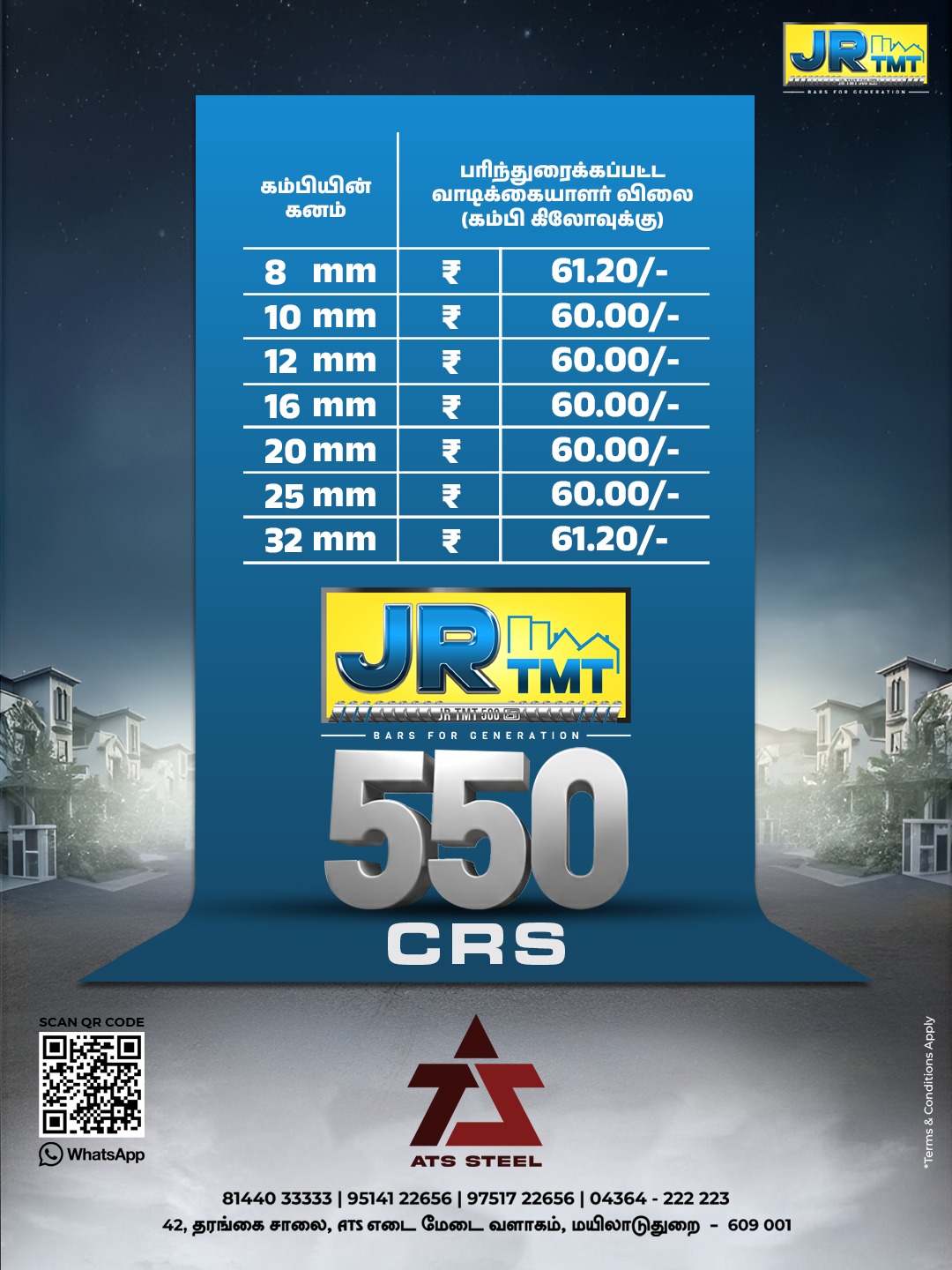

JR TMT 550 CRS
Our steel production leverages cutting-edge technology at every stage. TempCore Technology enhances strength, while automated universal testing and precision German spectrometers maintain exact quality control. Zero tension rolling ensures uniformity, and rigorous in-house lab testing guarantees consistency. These advanced processes allow us to produce steel products that excel in performance, reliability, and durability, meeting the most stringent standards for critical applications across construction and industrial sectors.
Product Description — JR TMT 550 CRS
JR TMT 550 CRS refers to Corrosion-Resistance Steel (CRS) Thermo-Mechanically Treated (TMT) bars manufactured by the company JR, with a minimum yield strength of 550 MPa. These are used as high-strength reinforcement bars in construction.
Key Features:
Grade Fe 550:Indicates a high minimum yield strength of 550 N/mm² (MPa), making them suitable for large-scale construction projects where significant load-bearing capacity is required.
CRS (Corrosion-Resistance Steel): The TMT bars are produced with added corrosion-resistant elements (like copper, chromium, and phosphorus) which reduce the rate of corrosion, enhancing the structure’s durability, particularly in coastal areas or where ground water has high salt content.
TMT Process: Manufactured using the “Tempcore Process” under license from CRM, Belgium, which involves rapid water quenching and subsequent self-tempering to achieve a strong outer layer and a soft ferrite-pearlite core.
Earthquake Resistance: The soft inner core and overall flexibility allow the bar to bear dynamic and seismic loading, making them suitable for use in earthquake-prone zones.
Bendability and Weldability: They offer good bendability and fine welding features, making them highly flexible for construction needs.
Typical Applications:
- High-rise buildings
- Bridges and dams
- Structures in coastal or humid areas
- General residential and commercial construction.
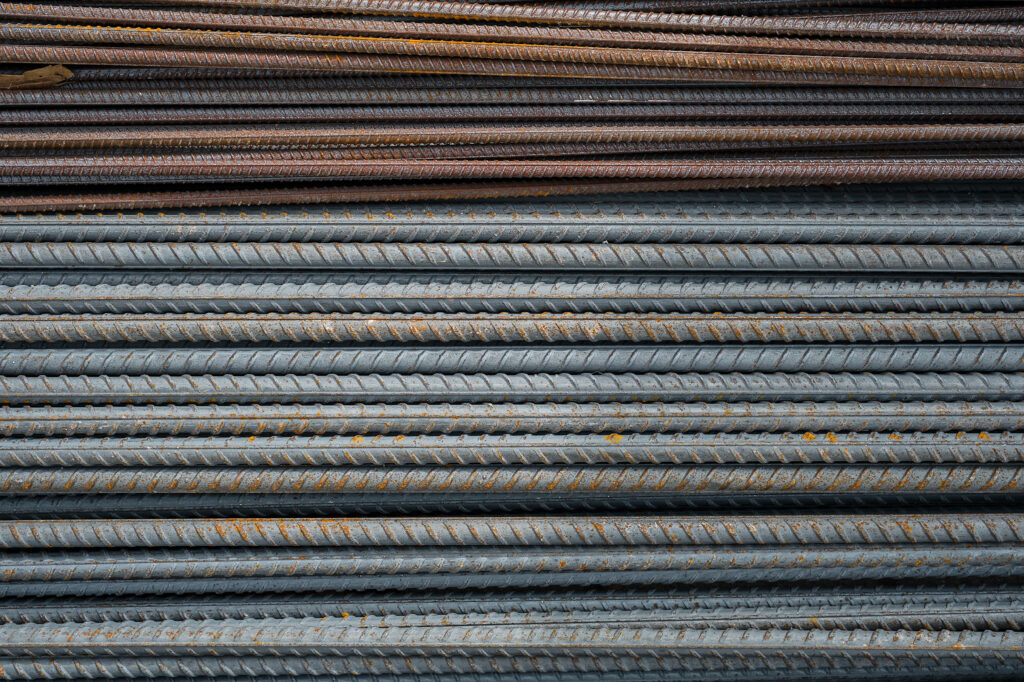
CRS Re-Bars (Corrosion-Resistant TMT Bars)
Corrosion poses a major threat to reinforced concrete structures, gradually weakening embedded steel and reducing structural strength. While complete prevention is challenging, its progression can be delayed with advanced materials and innovative construction techniques. Left unchecked, corrosion can cause premature failures and costly repairs, particularly in coastal, humid, or industrial environments. Using high-performance steel and protective measures ensures greater durability and long-term reliability of concrete structures.